Keep the information attached to the food
Retain the original packaging or its relevant details, including the product name, batch information and best-before date. Follow the manufacturer's storage directions. If you use an outer container, check whether the food should remain inside its original bag rather than being poured directly into the container.
Label opened products clearly and avoid combining different batches into an anonymous mixture. This makes it easier to answer questions if a product is recalled or your veterinarian asks what the dog has been eating. Do not rely on recognising the colour of a bag after it has gone into recycling.
Create a clean storage routine
Choose a cool, dry, secure location appropriate to the product. Keep food away from household chemicals and beyond the dog's reach. A determined dog may open a loosely fitted lid or pull down a bag, so check the actual closure rather than assuming a container is secure because it is large.
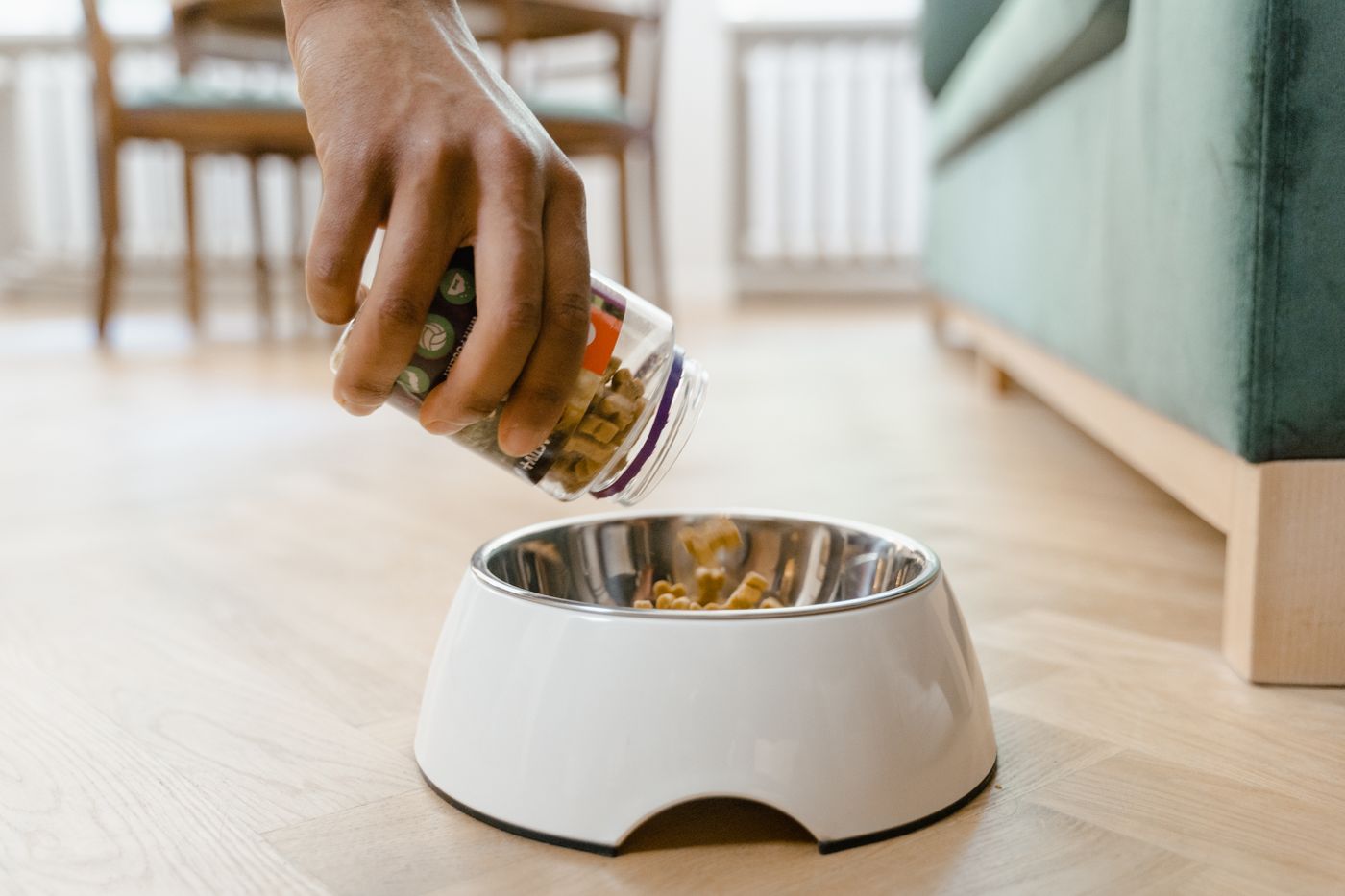
Clean containers according to their instructions before adding a new supply, and let them dry completely. Use a dedicated clean scoop or measuring method. Keep damp utensils out of dry food. Refrigerated or opened wet products require their own label-specific handling and should not be treated like shelf-stable unopened packages.
Make the feeding handover clear
Write the current feeding arrangement where authorised carers can find it, including how portions are measured and whether food is also used for training. Follow any existing veterinary directions. A scoop filled to different levels by different people is not a consistent measurement simply because it is the same scoop.
Check stock before it runs out so an urgent shopping trip does not force an unplanned change. If a diet change is needed, ask for appropriate advice rather than mixing several new products at once. Keep treats organised separately but include them in the overall care notes. Good storage preserves useful information as well as keeping the kitchen tidy.