Make the first hiding place barely hidden
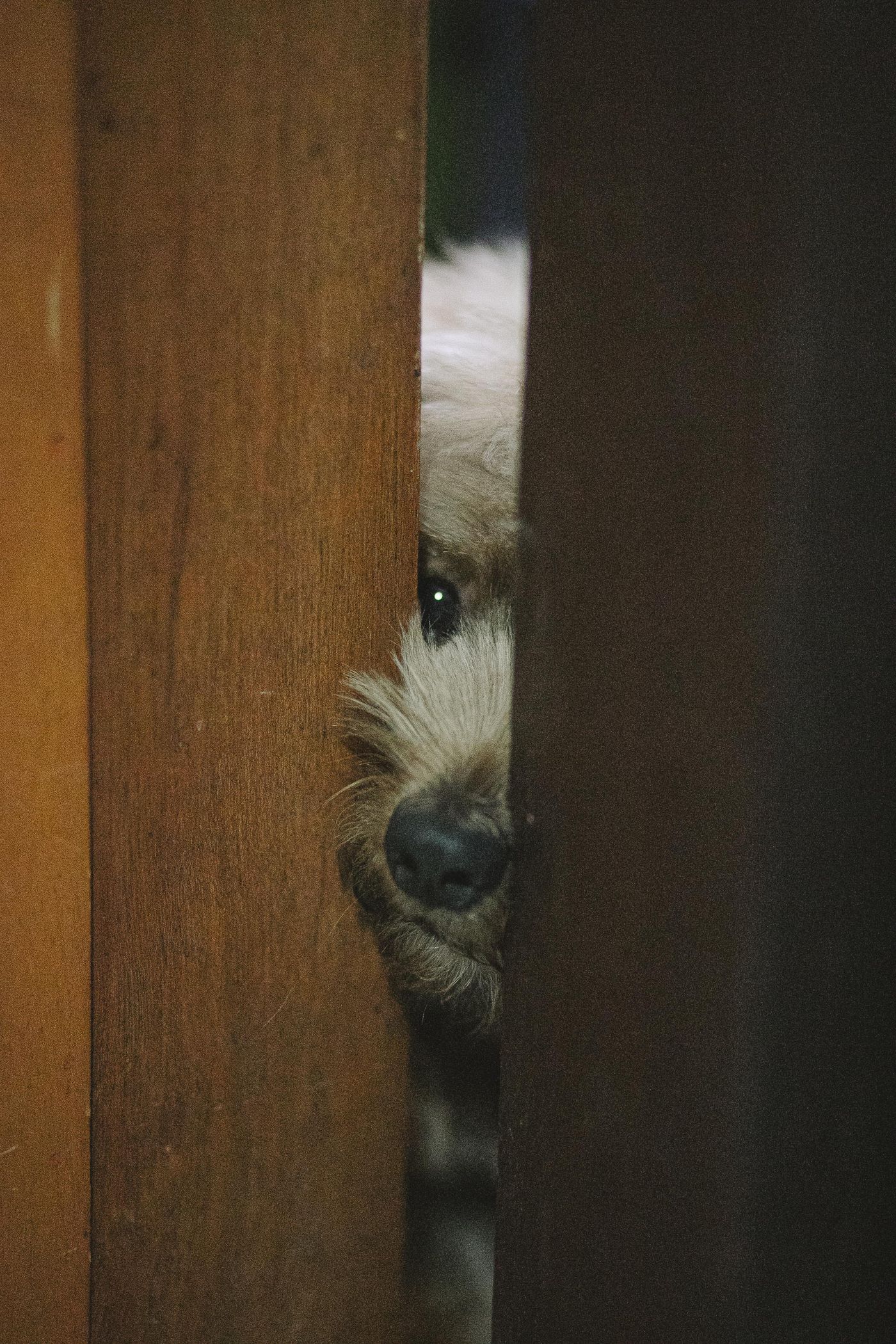
Choose a familiar room with clear floors and no narrow gaps the dog could become trapped in. Stand partly behind a doorway or a stable chair while remaining easy to see. Invite the dog to find you in a friendly voice and reward the approach. There is no need for another person to restrain the dog or create an excited release. Begin when the dog is comfortable and interested, rather than trying to distract them from distress about being separated.
Keep the exit available and avoid hiding somewhere that requires climbing, pushing through objects or squeezing under furniture.
Add a little uncertainty gradually
Once the dog understands that approaching you starts a pleasant interaction, move slightly farther behind the same object. Use the same invitation and wait briefly. If the dog cannot locate you, make a small sound or step into view. The aim is successful searching, not remaining perfectly silent while the dog becomes worried. Reward the discovery with something the dog welcomes, such as a suitable treat or brief gentle play. Enthusiastic grabbing and hugging can spoil the arrival for a dog who prefers space.
Change hiding places only after the easy location makes sense, keeping every new position simple and safe.
Keep the game friendly and easy to finish
Avoid jumping out to surprise the dog when they find you. A startled reaction is not evidence that the game was exciting in a useful way. End after a few willing searches and remain visible while you move into another ordinary activity. This game does not teach a dog to tolerate being left alone for long periods; that requires a separate gradual plan suited to the individual. If searching for you causes repeated whining, frantic movement or difficulty settling, choose an activity that does not involve your temporary disappearance.