Look for competition in the room layout
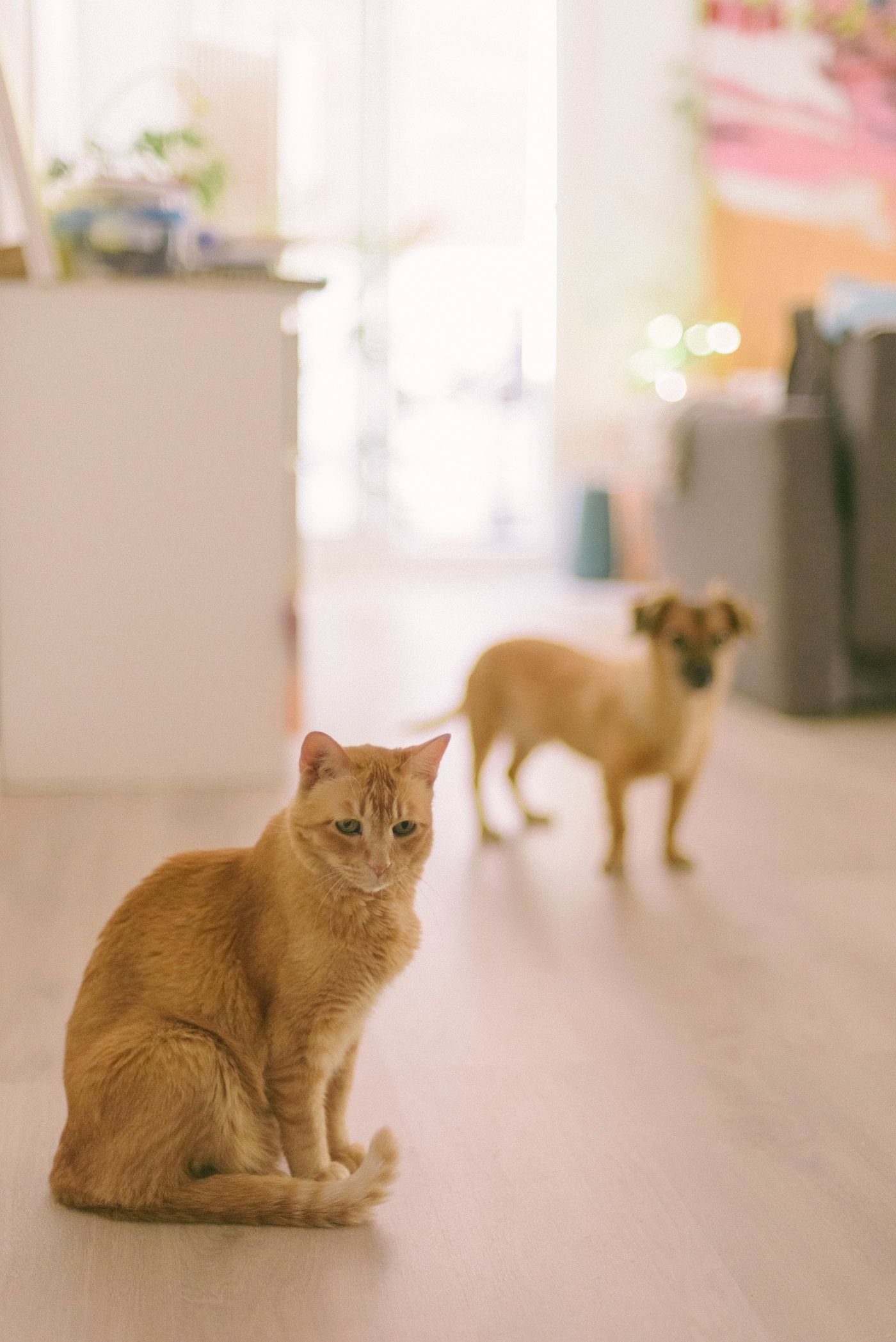
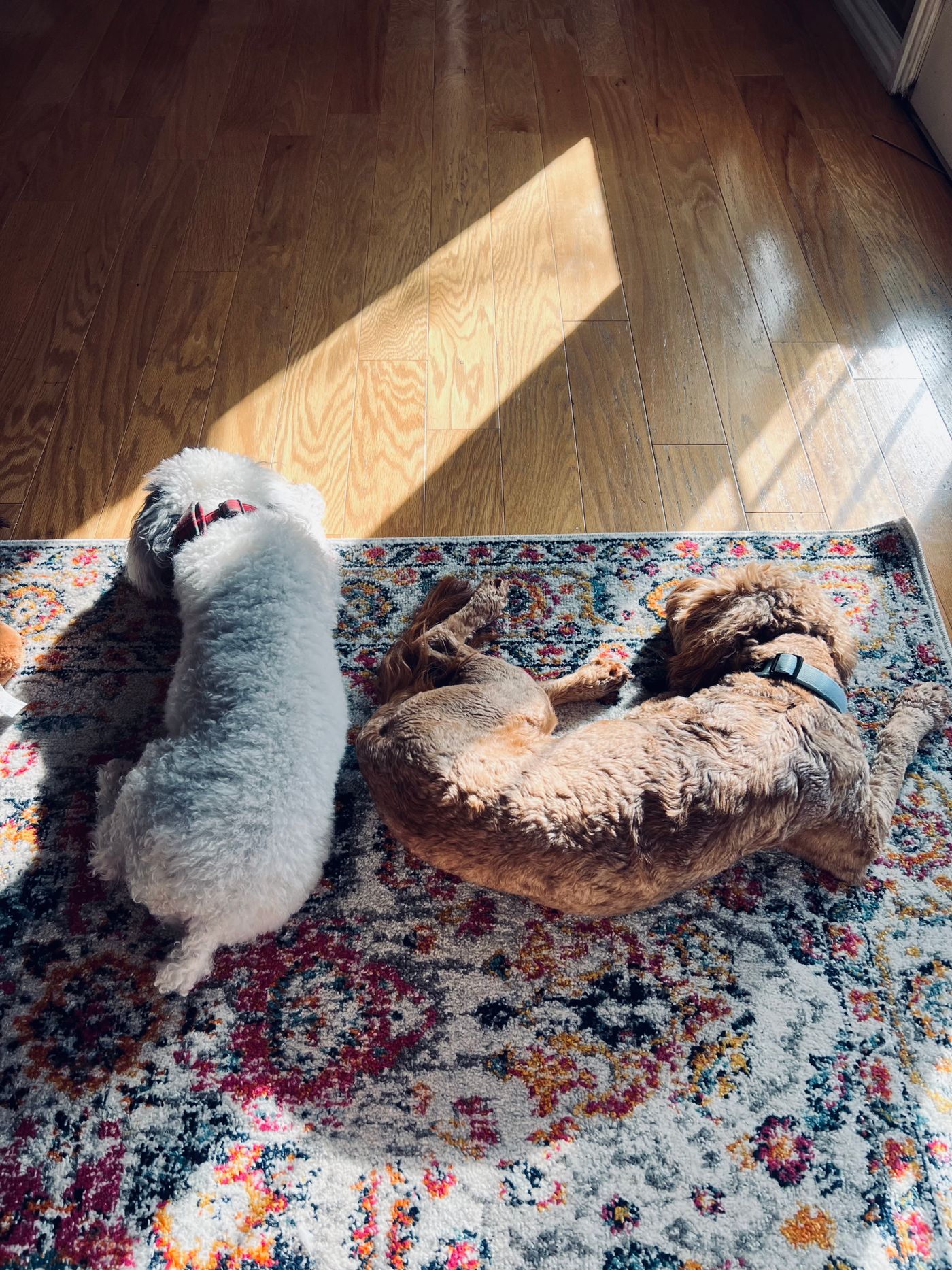
Notice whether both dogs repeatedly approach one sunny spot, one doorway or the bed beside a person’s chair. The problem may be the location rather than the quantity of bedding. Two beds pressed together still create a single crowded resting area.
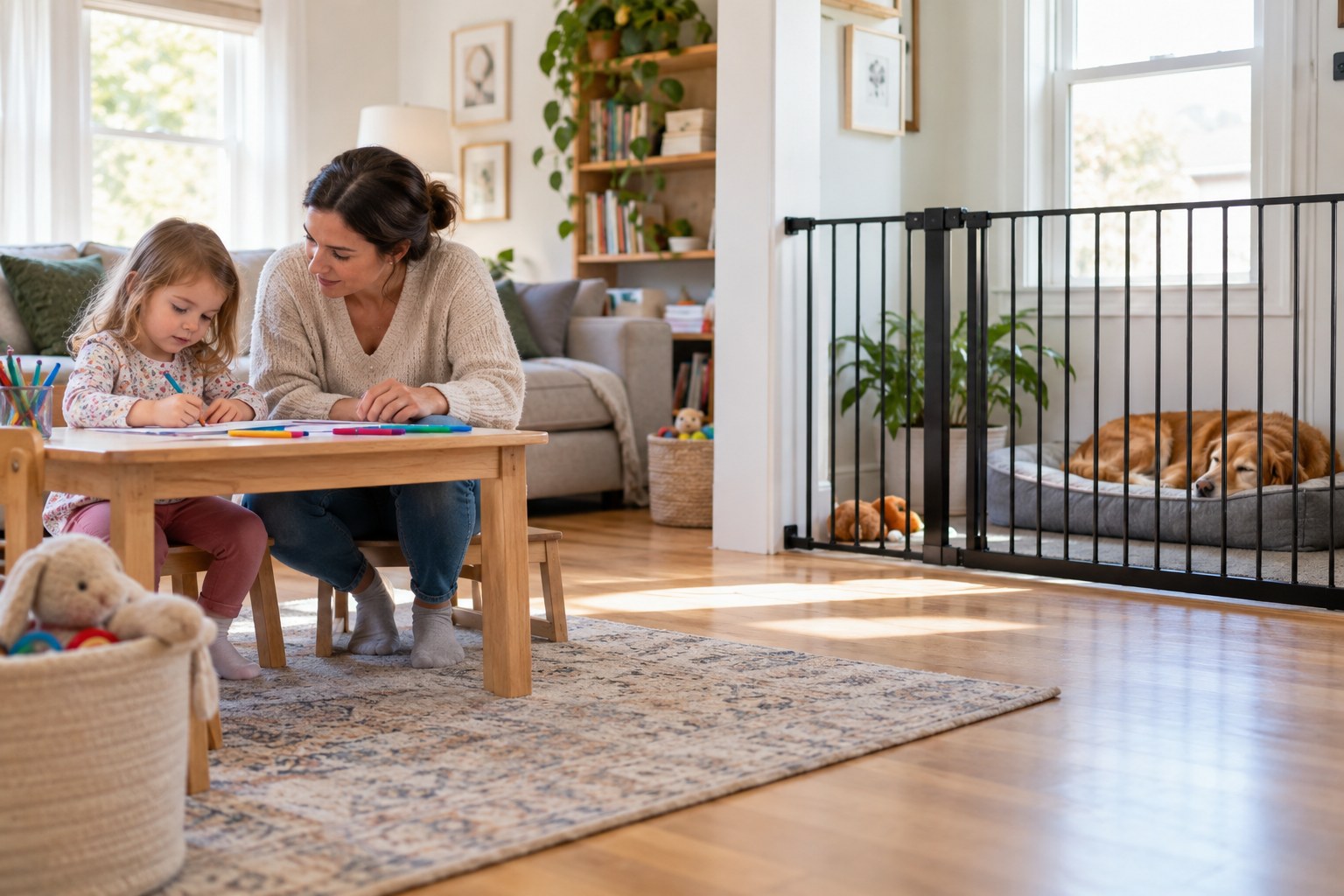
Place options far enough apart that one dog can settle without brushing past the other. Keep entrances and water access clear. In a small home, using separate rooms or barriers at particular times may work better than trying to fit every resting arrangement into the same corner.
Offer comparable comfort without identical rules
Different dogs may prefer different surfaces, temperatures or levels of household activity. Provide beds that suit those preferences rather than insisting on matching furniture. A dog that needs easier access should not have to climb or squeeze into the only quiet space.
Watch transitions as well as sleep. Returning from a walk, greeting a visitor or joining a person on the sofa can change how the dogs use the room. Give each dog a clear option at those times and avoid adding high-value food or toys to a shared resting area if that creates tension.
Use separation before a dispute develops
Do not wait for a confrontation to justify giving the dogs more room. Blocking a path, repeatedly displacing the other dog or difficulty resting can be reasons to rearrange the environment. Avoid physically intervening between dogs in conflict; seek professional guidance about safe management when aggression or guarding is a concern.
Keep an individual view of each dog’s rest. One may sleep while the other wants company or activity. You can meet those needs separately without trying to make the household perform every task as a pair. Review the setup after changes in health, age or routine. A useful arrangement is one in which both dogs can choose to settle and leave without repeatedly negotiating access to the same narrow route or person.