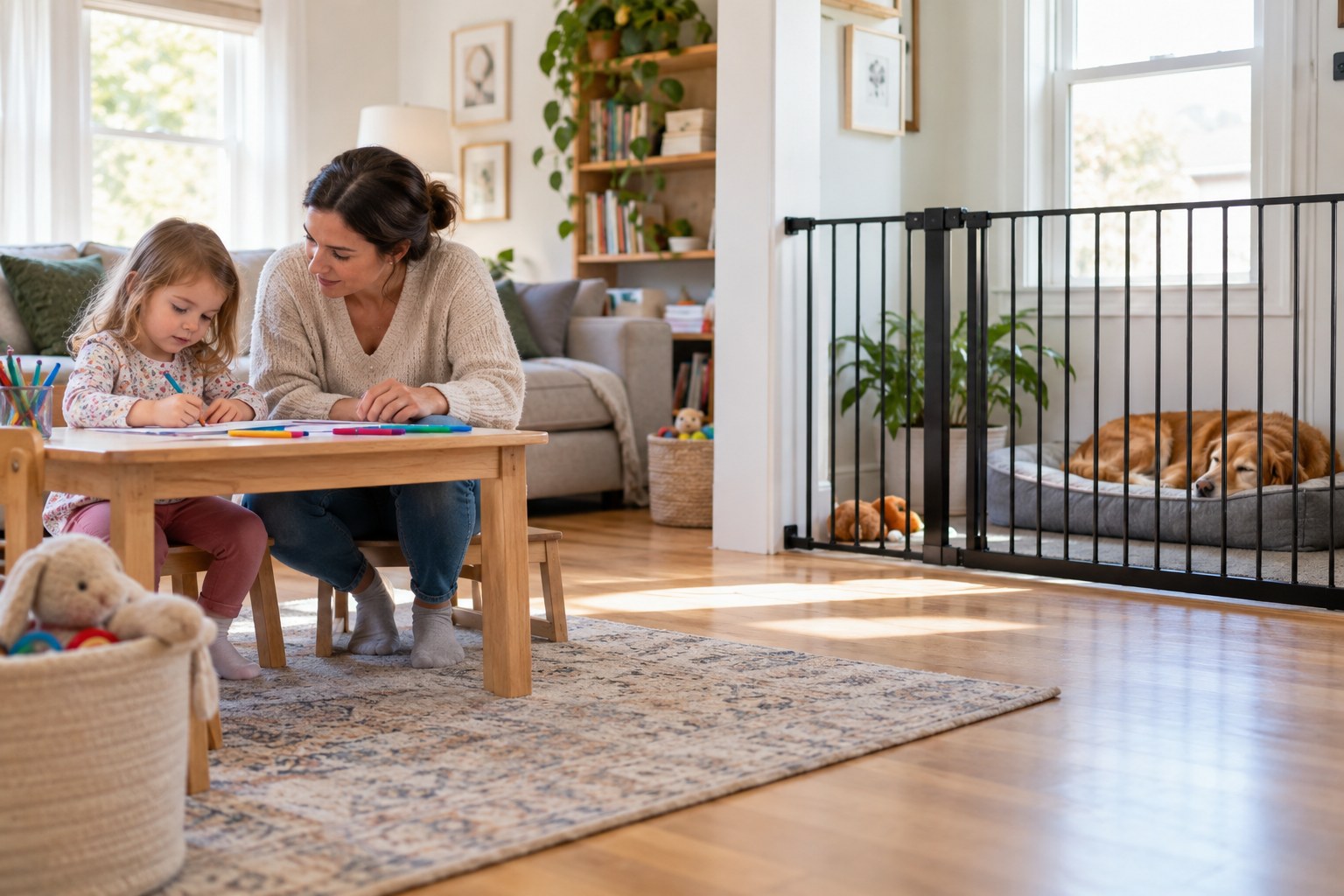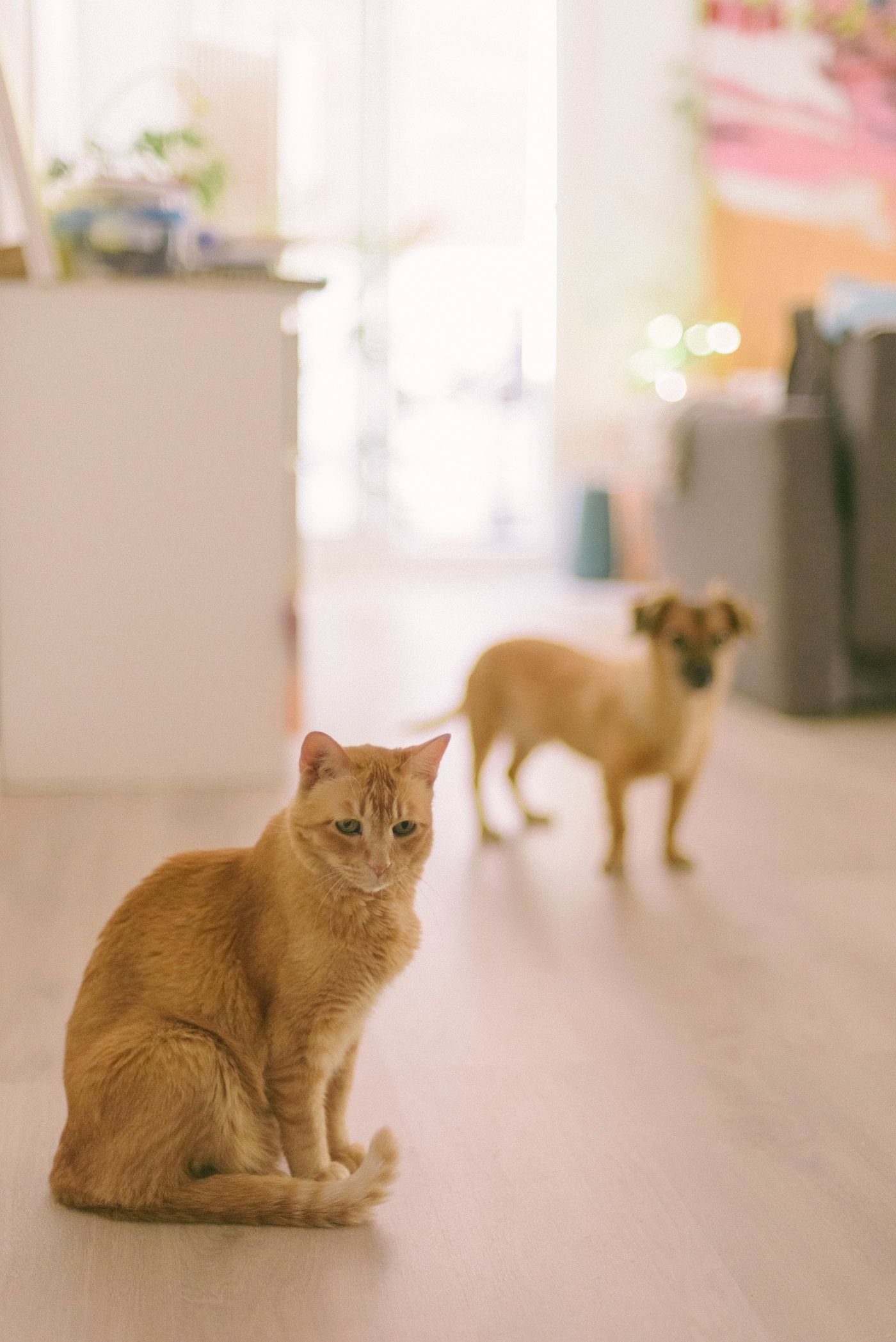
Set up a dog-free area for the cat
Provide the cat with access to food, water, a litter tray and comfortable resting places where the dog cannot follow. Check the actual barrier: an opening that lets a cat pass may also admit a small dog, and a low gate may not contain a determined animal.
Keep the household routine workable on both sides of the boundary. The cat should not have to pass the dog to reach essential resources. Consider doors, visitors and the path people use while carrying shopping. A careful introduction can be undermined by one casually propped-open door.
Allow information without forcing proximity
Let the animals become accustomed to the household arrangement while physically separated. Do not carry the cat towards the dog or hold either animal in place to make them inspect the other. Arrange early controlled viewing only when both can remain at a comfortable distance, with appropriate barriers and the dog securely managed.
Reward the dog for calm, manageable behaviour when suitable, and prevent chasing. The cat needs a clear way to retreat. If either animal is frightened or the dog fixates and cannot disengage, end the exposure and increase separation. Repeating an overwhelming encounter is not a shortcut to familiarity.
Make progress about comfort rather than a date
There is no timetable that proves the animals should share a room by a particular day. Short, carefully managed opportunities may gradually become easier, or you may need professional guidance and a longer-term separation arrangement. Seek qualified help promptly if either animal’s safety is in doubt.
Continue protecting the cat’s resources as familiarity develops. Food bowls and litter areas should not become places where the dog can corner or disturb the cat. Do not leave the animals together unattended until you are confident they can coexist safely, and keep practical separation available. Successful sharing may look like peaceful distance rather than sleeping in the same bed or playing together for a photograph.