Start with size and construction
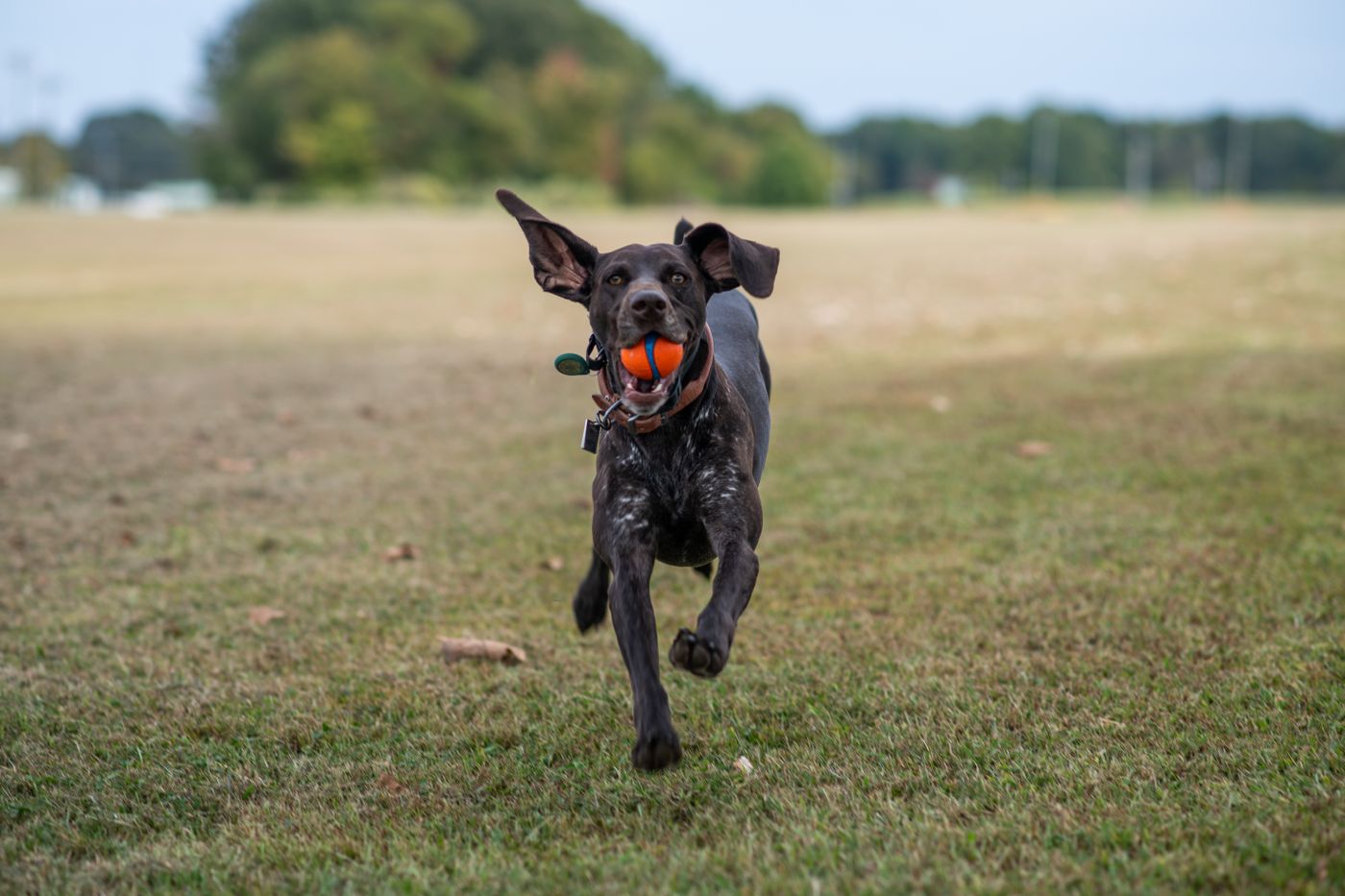
Choose a ball made for dogs that cannot easily disappear entirely into your dog's mouth. Check the manufacturer's size guidance and inspect how the dog picks it up under supervision. Avoid tiny balls, damaged surfaces and parts that can separate. A ball that is too large or heavy to carry comfortably is not automatically a good alternative. Ask your vet or a knowledgeable professional for help when uncertain about a suitable shape or size for your dog.
Match the ball to the activity
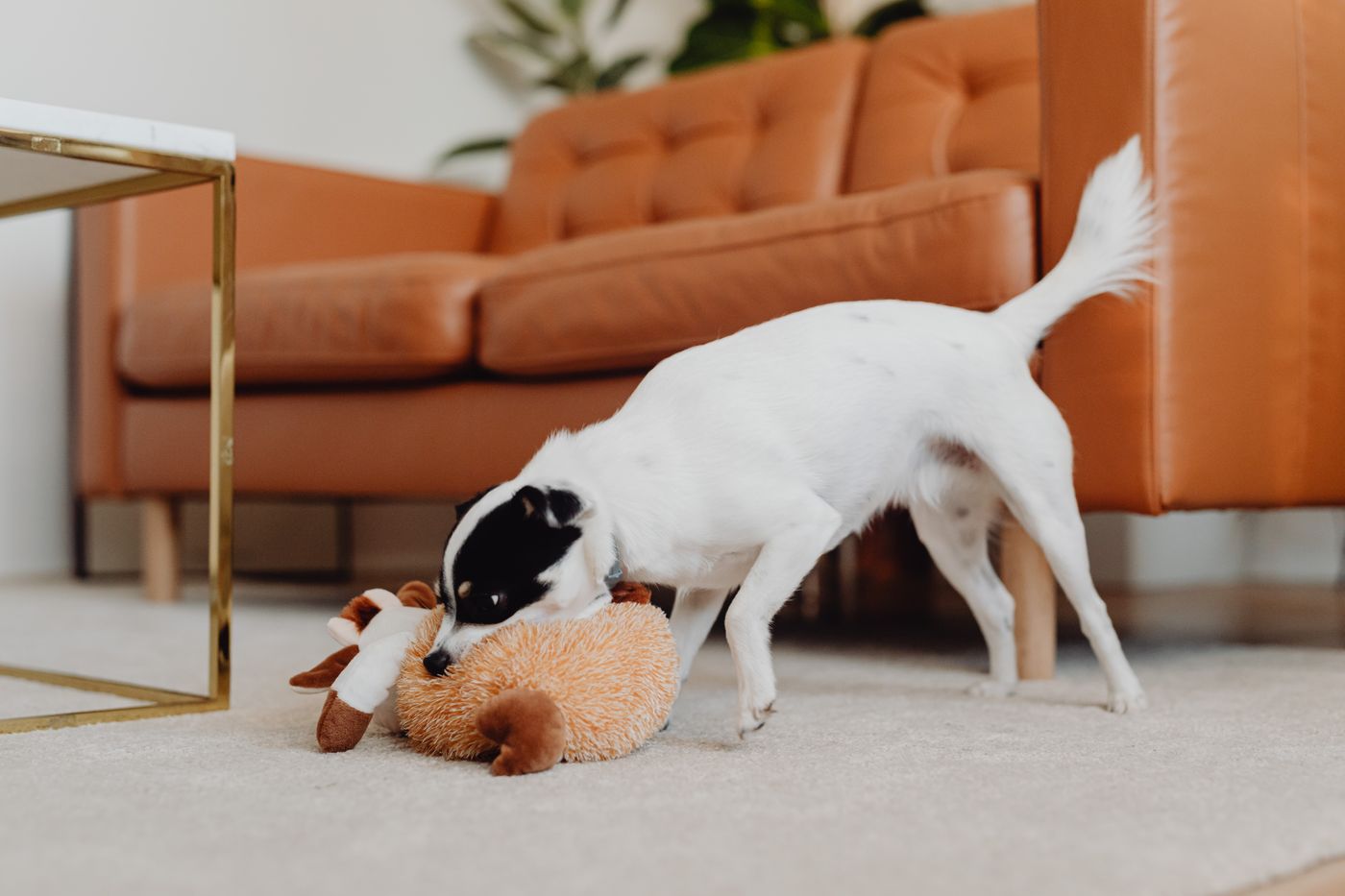
A soft carrying toy, a rolling ball and a food-dispensing ball have different purposes. Follow the product's intended use rather than treating every round object as a chew toy. A dog who crushes and tears a ball quickly needs a different format, not repeated access to the same damaged design. Consider the playing surface too: an unpredictable high bounce may encourage movement you did not intend, especially on hard or slippery ground.
Inspect before and after each game
Look for splits, loose coverings, missing pieces and changes in shape. Retire damaged toys promptly rather than relying on a repair that might detach. Keep a clear count when several balls are used outdoors and check the ground before leaving. In homes with dogs of different sizes, a ball suitable for the smallest dog may be unsafe for the largest. Separate play and store equipment so each dog cannot casually collect another's unsuitable toy.
Do not make the ball the whole activity
Watch whether your dog enjoys carrying, searching or sharing the toy, rather than assuming repeated chasing is the goal. Offer brief games with pauses and choose another activity if possession creates conflict. If a ball becomes lodged or your dog shows breathing difficulty, seek urgent veterinary help rather than trying to continue play or relying on internet training advice. Prevention begins with suitable equipment, but supervision remains necessary even with a familiar favorite.