Decide what staying means today
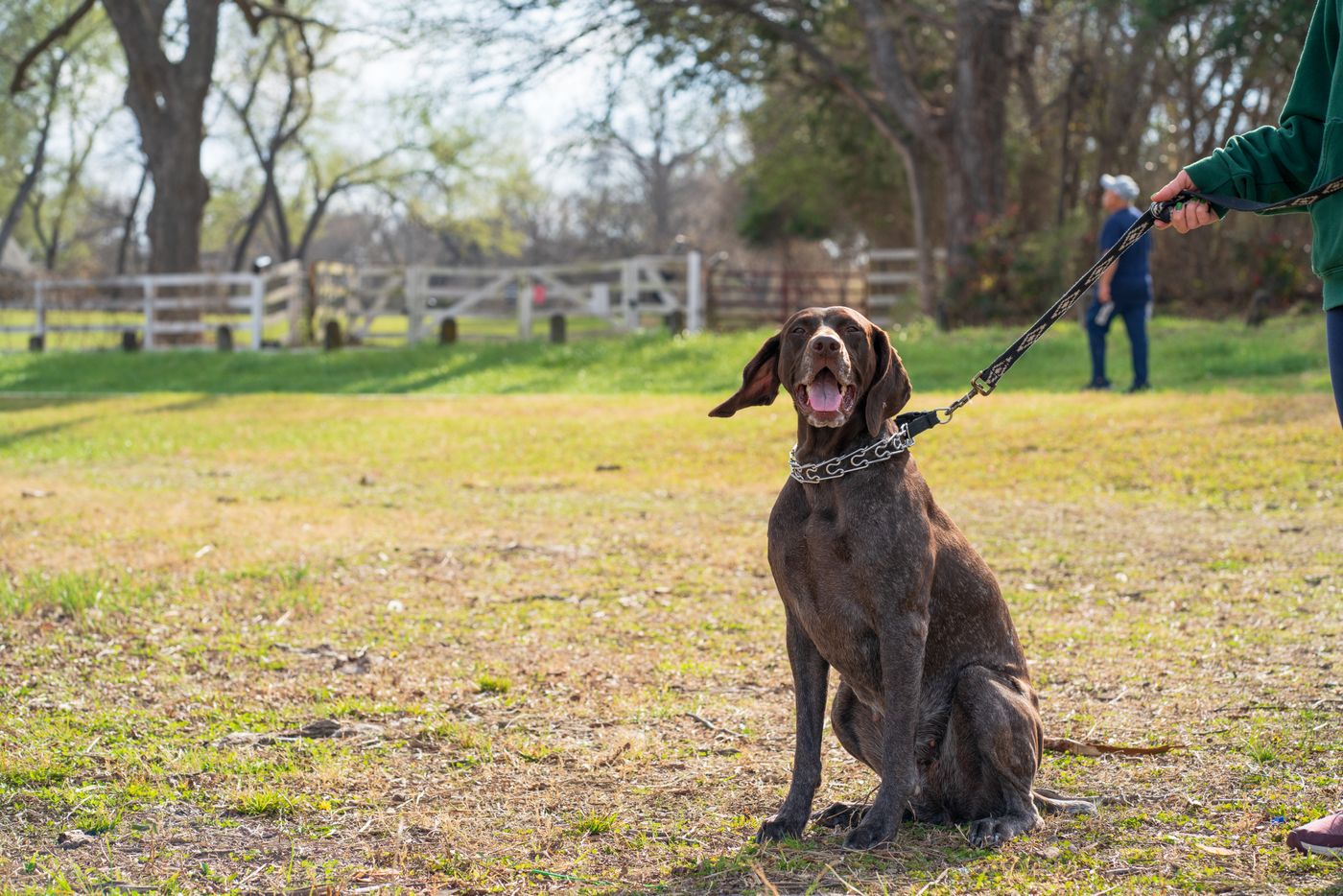
Begin with a comfortable sit, stand or down in a quiet room. Pick one position the dog can maintain easily rather than insisting on a particular shape. Reward being there, pause briefly and reward again before the dog moves. Release clearly. At this stage, remaining still for a moment while you are close is enough. Keep a non-slip surface under the dog and remove distractions that make following you especially tempting.
Move one foot and come back
When a short pause is easy, shift a foot a small distance and immediately return it. Reward the dog in place. Gradually build to one small step away and back, keeping the absence brief. Returning before rewarding helps show where success happens. If your dog follows, your movement was probably too much for the current level. Reset kindly and use a smaller weight shift rather than repeating the same failed step.
Do not increase everything together
Distance, time and distractions each change the exercise. After adding a step, keep the duration short and the room quiet. When adding a little time, remain closer again. A delivery noise or someone entering the room can make a familiar setup unexpectedly difficult. End or simplify the repetition instead of using the surprise as an impromptu examination. Progress can be uneven without meaning the dog has forgotten the skill.
Practice useful versions before dramatic ones
A brief pause while you reach for a lead is more relevant than walking to the far end of the house. Introduce that small movement separately and reward successful stillness. Avoid calling the dog toward you at the end of every stay, which can make anticipation of coming over dominate the exercise. Usually return, reward and release nearby. Maintain barriers at exits and supervision around hazards regardless of how reliable the indoor practice looks.