Check the practical welcome
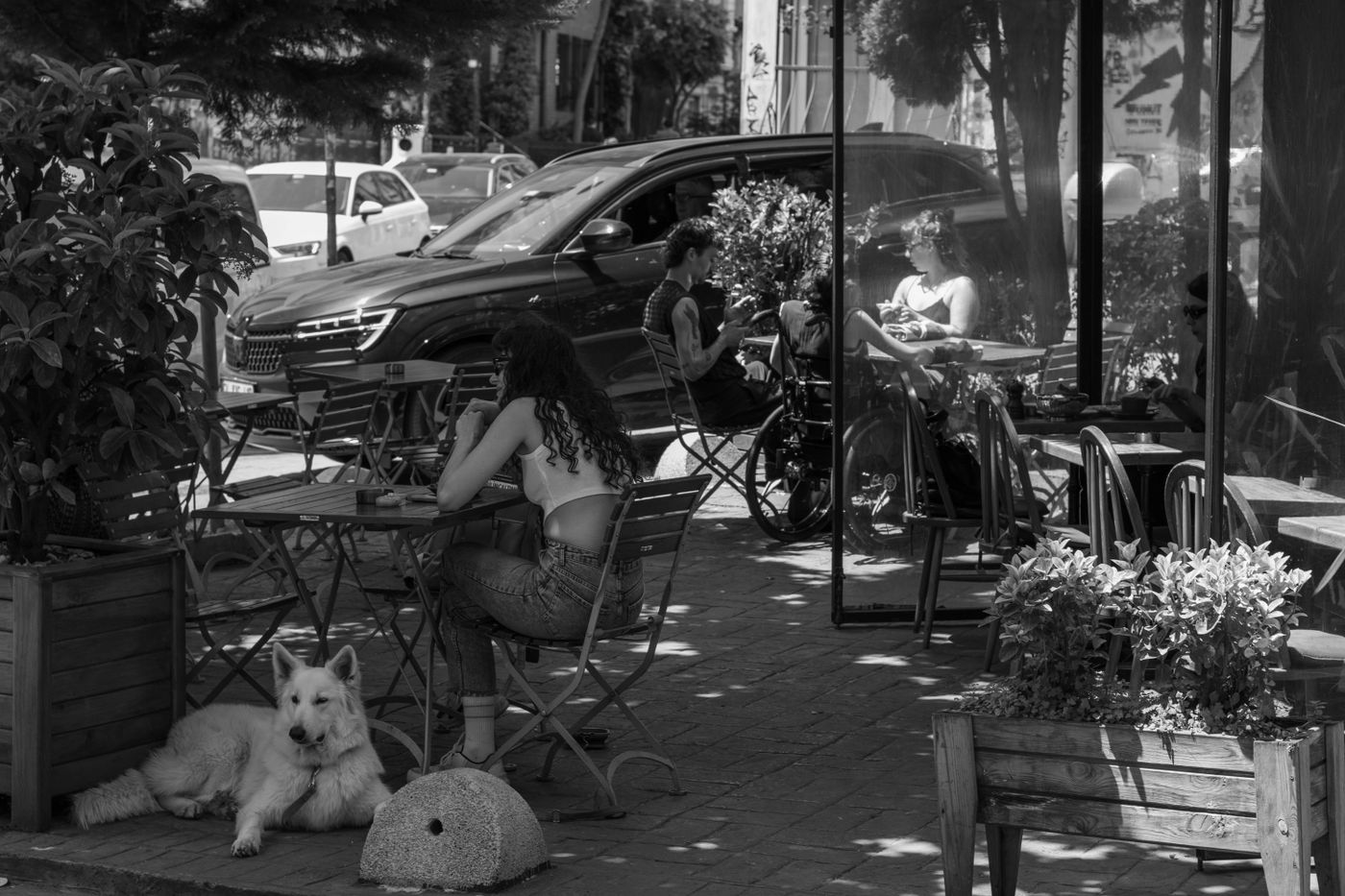
Ask whether dogs are allowed in the seating area you intend to use, including any restrictions on busy periods. An outdoor table is not automatically a comfortable table: it may sit beside a bicycle lane, a doorway or a queue. Look for an edge position with space for your dog to rest away from feet and passing trays.
Choose a visit when leaving is easy. Meeting a large group or ordering a long meal makes it harder to respond when your dog has had enough. For a first attempt, a short stop with another adult who can help manage the practical details may be simpler than going alone with several bags.
Set up without blocking the café
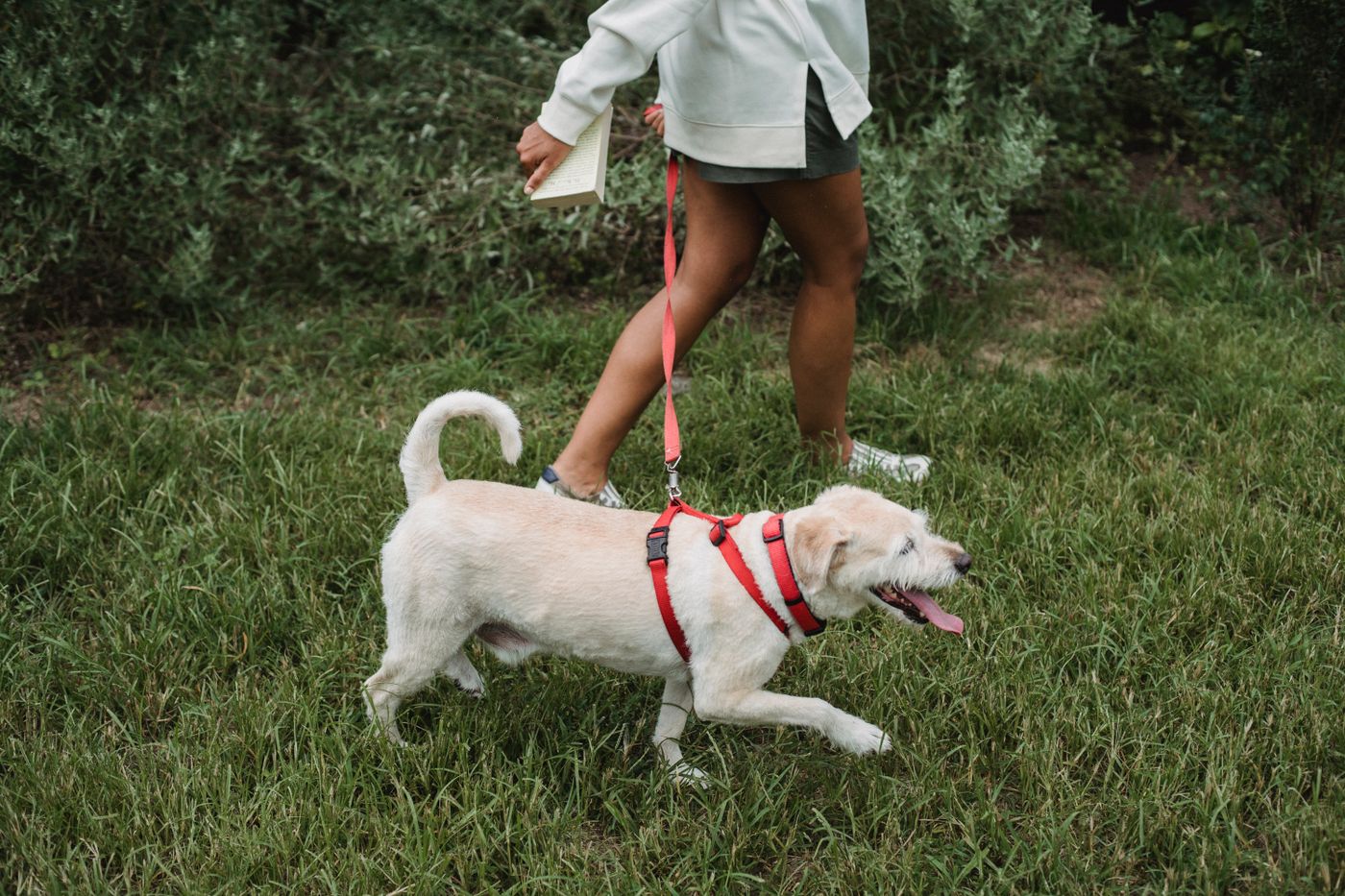
Bring a familiar mat if your dog already rests comfortably on it, and arrange the lead so it cannot trip staff or pull furniture over. Keep water accessible. Do not tie the dog to a lightweight chair and assume that settles the supervision question. Position yourself where you can watch both your dog and the approaching traffic of people.
Reward comfortable behaviour quietly if suitable for your dog. There is no need to demand a rigid position throughout the visit. Ask well-meaning visitors to give the dog room rather than letting every customer lean down for a greeting. A resting dog needs less interruption, not an audience for doing well.
End the visit while leaving is straightforward
Repeated attempts to leave, scanning, barking or difficulty settling are reasons to reassess the situation, not to add more pressure. Move away or finish the visit. Some dogs prefer a quiet walk followed by rest at home, and the café can remain an activity you do without them.
After a comfortable short visit, repeat a similar setup before adding duration or a busier location. Avoid treating one calm stop as proof that every venue will suit. Noise, spacing and temperature can make a familiar place feel different, so make the choice again each time you arrive.